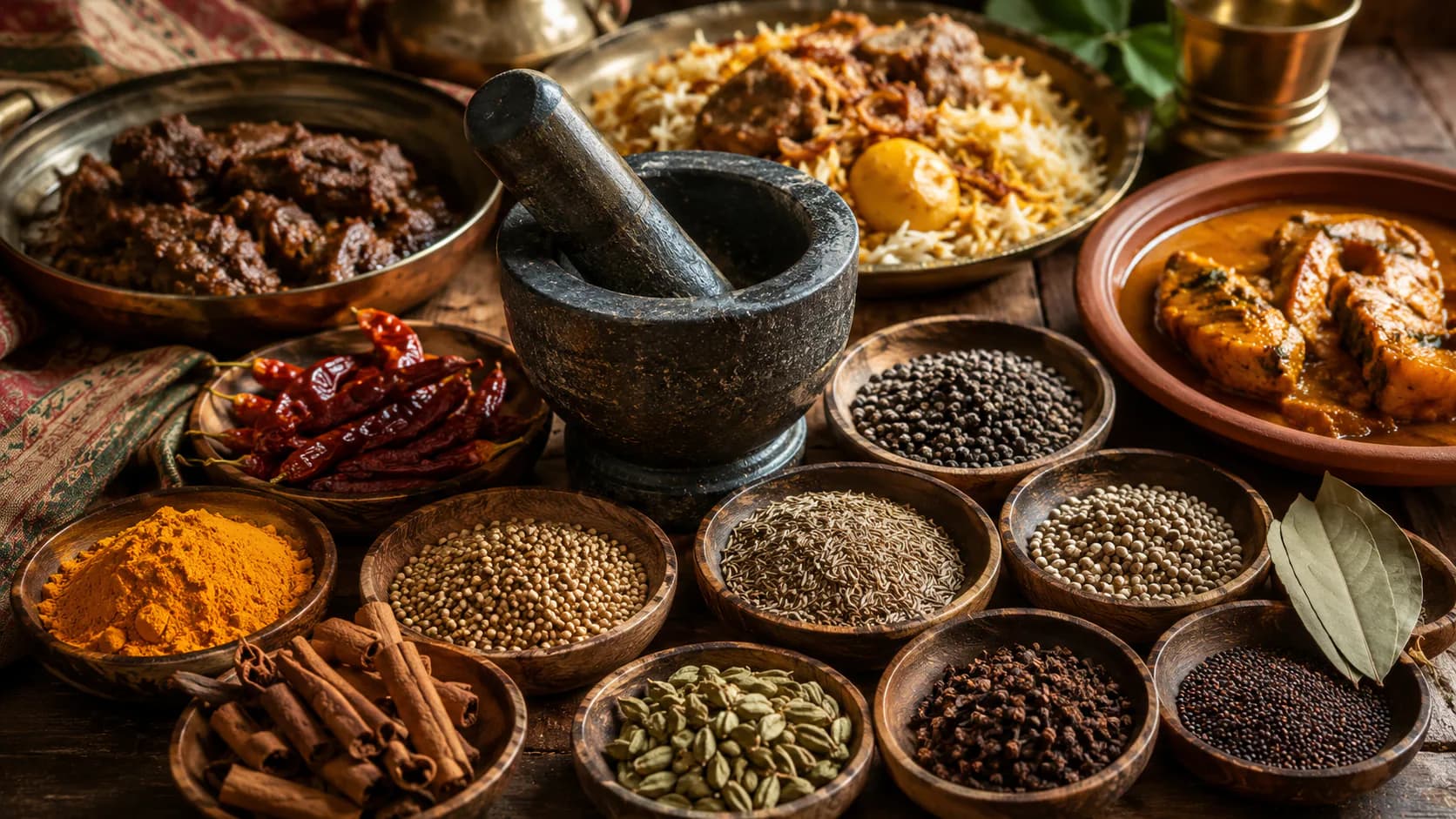

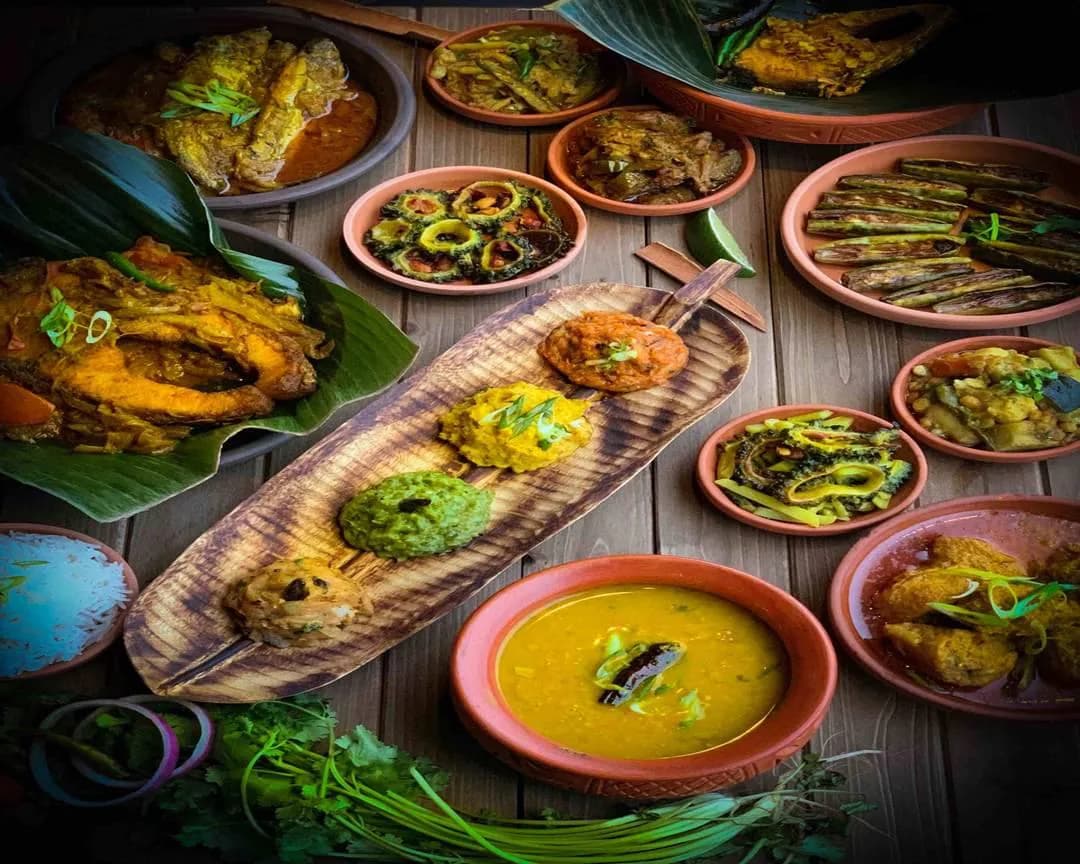
Bangladesh's food map is shaped by rivers, floodplains, coast, haor and hills. Rice may anchor the table, but ingredients and techniques shift remarkably from one place to the next.
This is a tasting route, not a set of borders. Dishes travel, names change and neighbouring districts share traditions. These associations point to places where a food has a particularly strong public memory.
Kalai ruti with beef bhuna
Dense, earthy kalai ruti made with black gram flour is a natural partner for a dark beef bhuna. The bread's robust flavour and chewy edge stand up to a gravy built from onion, ginger, garlic, cumin, coriander and dried chilli.
Often enjoyed in cool weather, the pairing speaks to a regional table where pulses, grain and slow-cooked meat meet without unnecessary ornament.
Mezban beef and the generous table
Mezban describes a tradition of open-handed communal hospitality. Its famous beef is cooked in quantity, with a bold masala and a gravy reduced until spice, onion and meat taste inseparable.
The dish belongs to an occasion as much as a recipe: eating together is part of its meaning.
Loitta shutki bhuna
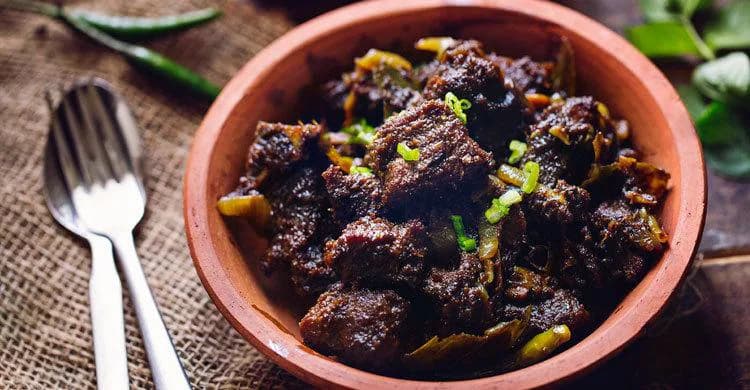
Sun-dried loitta, or Bombay duck, carries the concentrated salinity of the coast. Cooked down with onion, garlic, chilli, turmeric and mustard oil, it becomes an intensely savoury, dry-style bhuna.
Careful washing and patient cooking round the aroma while preserving the ingredient's distinctive character. Steamed rice is all the accompaniment it needs.
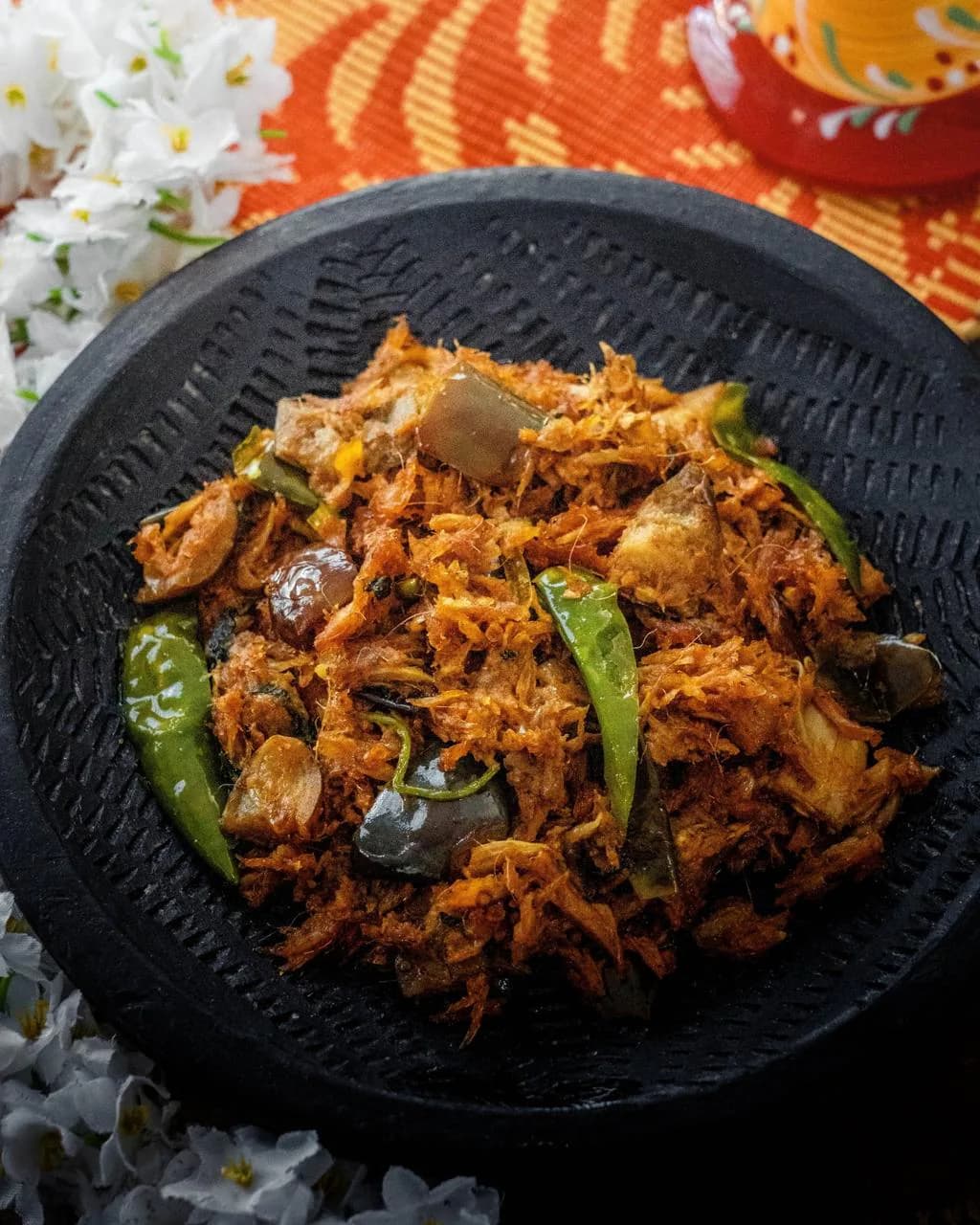
Alu bori chicken ghonto
Chicken, potato and sun-dried lentil bori share one pot in this home-style ghonto. As the bori soften, they absorb the gravy while keeping small pockets of texture.
The original manuscript labelled this section Kala Bhuna, but described Alu Bori Chicken Ghonto throughout; the heading has been corrected so title and story agree.
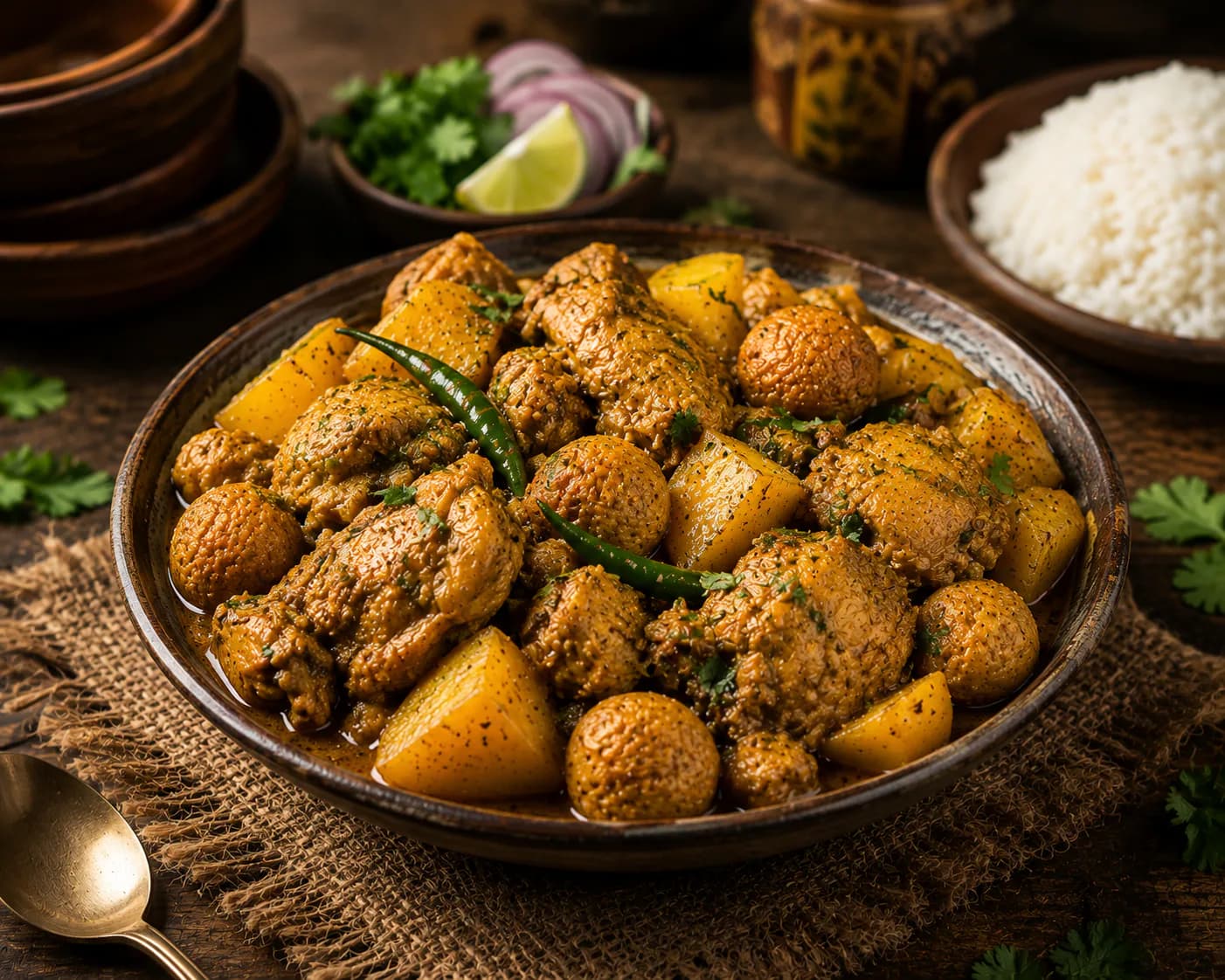
Beef with shatkora
Shatkora's thick rind releases a floral bitterness and citrus perfume as it simmers with beef. It cuts through richness in a way that lime juice cannot quite reproduce.
Warm spices and green chilli support the fruit rather than masking it, creating one of Sylhet's most recognisable flavour signatures.
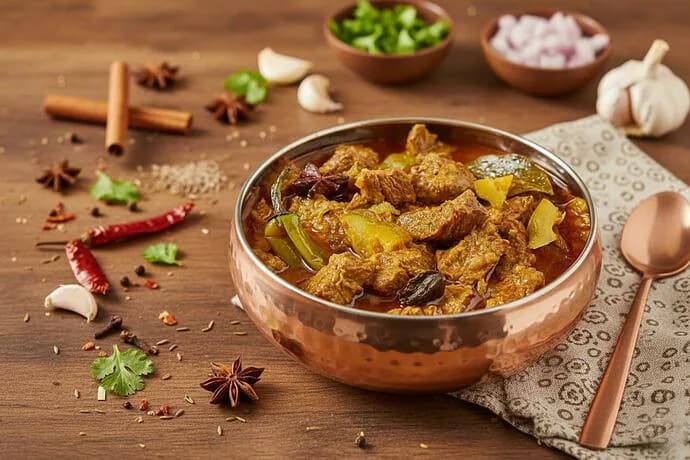
Beef chui jhal
Chui jhal is the aromatic stem of a climbing pepper plant used across the south-west. Pieces simmer with beef until their woody warmth moves into the gravy.
The heat is earthy and lingering, distinct from fresh or dried chilli. The dish is particularly associated with Khulna, Jashore and Satkhira, where chui jhal remains part of both home and restaurant cooking.
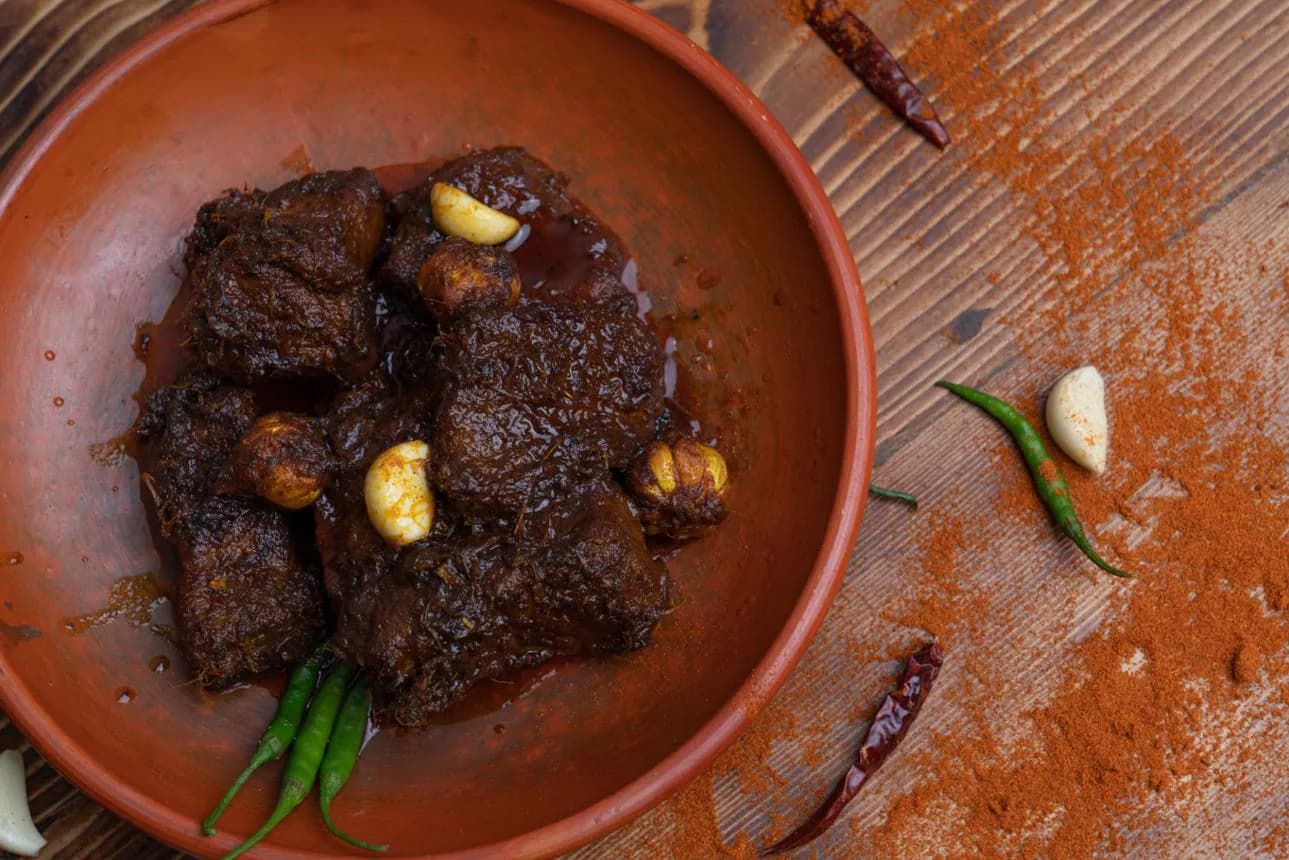
Chicken cooked in bamboo
In hill cooking, fresh bamboo can become both vessel and flavouring. Seasoned chicken is enclosed in a bamboo tube and cooked near a fire, trapping steam while the bamboo lends a clean, green aroma.
Methods and seasonings differ among communities. The shared idea is resourceful cooking closely tied to the landscape and to collective outdoor preparation.
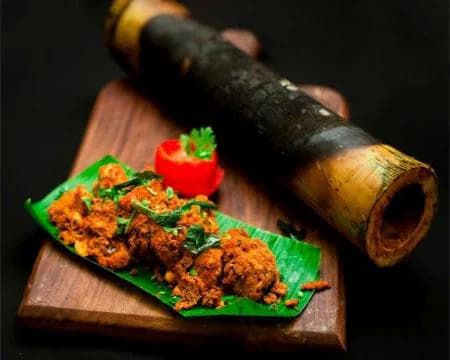
Pithali, also known as milli
Pithali or milli is described in the supplied manuscript as a rice-flour preparation connected with family and community meals in Jamalpur. Mild in itself, it is paired with assertive curries and bhorta.
Because names and preparations vary locally, this story treats the dish as an invitation to further oral-history documentation rather than a single definitive recipe.
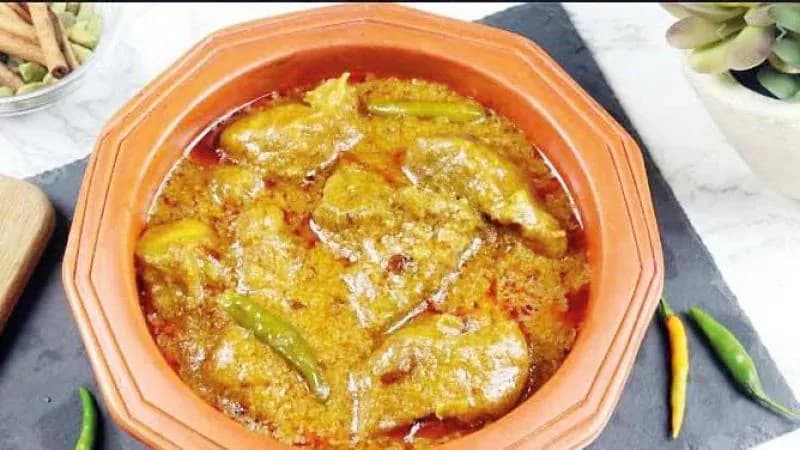
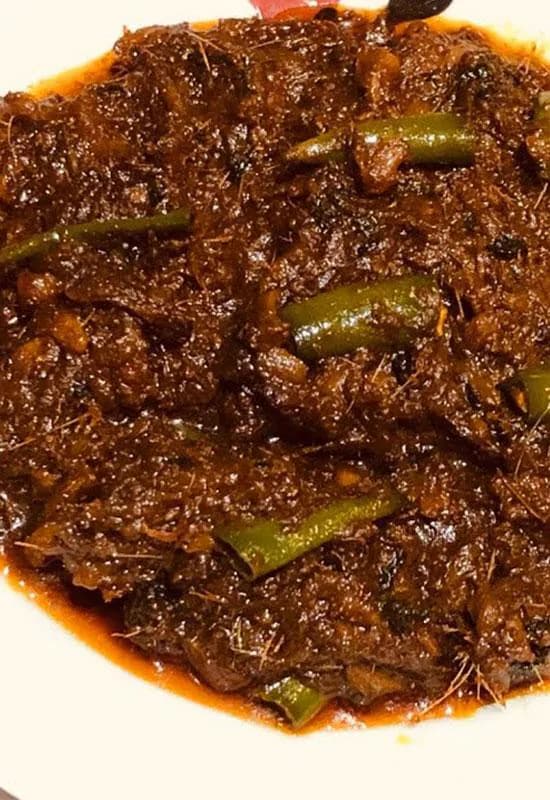
Kacchi morich beef bhuna
Fresh green chilli gives this beef bhuna a bright fragrance before its heat registers. Onion, ginger, garlic and warm spices are cooked down until the gravy clings to the meat.
Adding some chillies earlier and some near the end creates two layers: mellow warmth in the masala and a fresher green aroma at service.
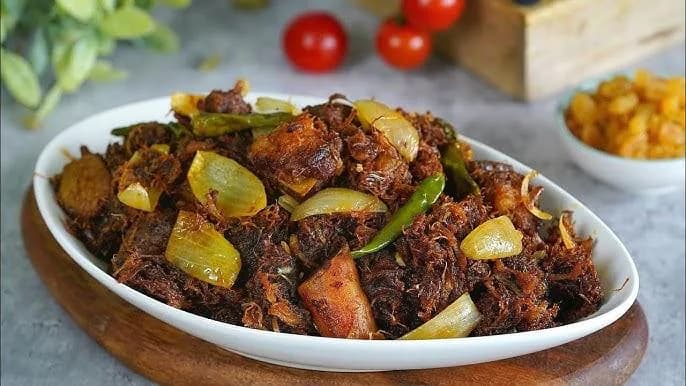
Ilish curry at the river confluence
Chandpur's identity is closely tied to hilsa and to the waterways around the Padma and Meghna. In a restrained curry, mustard oil, turmeric and green chilli frame the fish rather than compete with its natural richness.
The final paragraph of the source manuscript switched to Barishal; this edition keeps the story centred on Chandpur while recognising that hilsa traditions belong to river communities across Bangladesh.
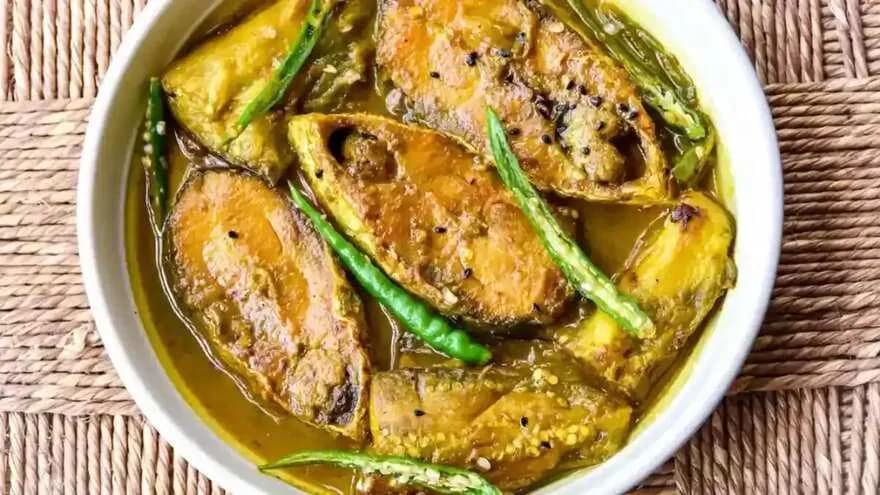
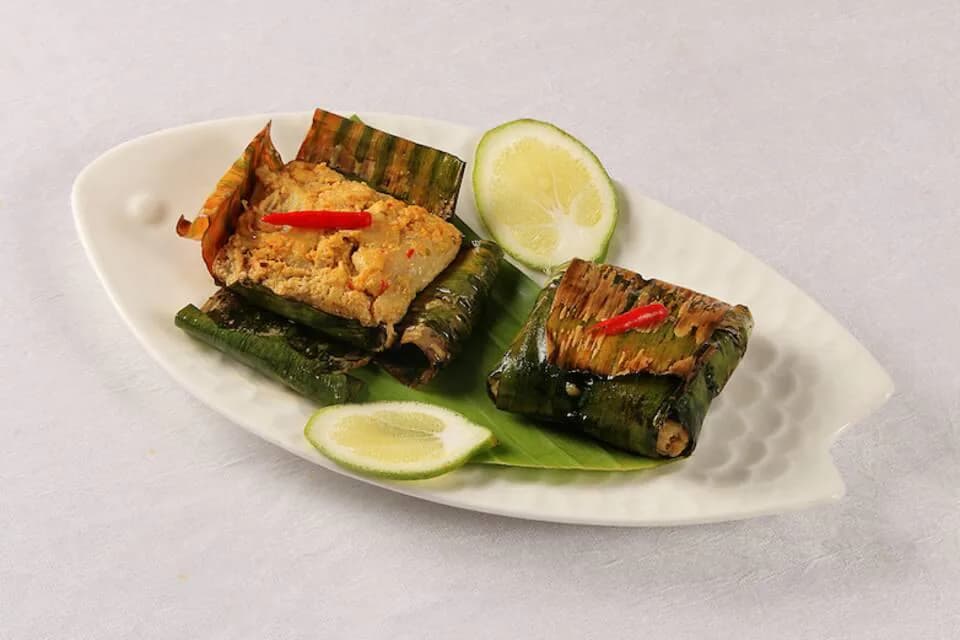
Fish hebang in banana leaf
Fish wrapped with herbs and chilli inside banana leaf cooks in its own moisture, whether steamed or placed near charcoal. Unwrapping the parcel releases an earthy fragrance before the first bite.
The technique is economical and gentle. It preserves the fish's texture while allowing local herbs to remain distinct.
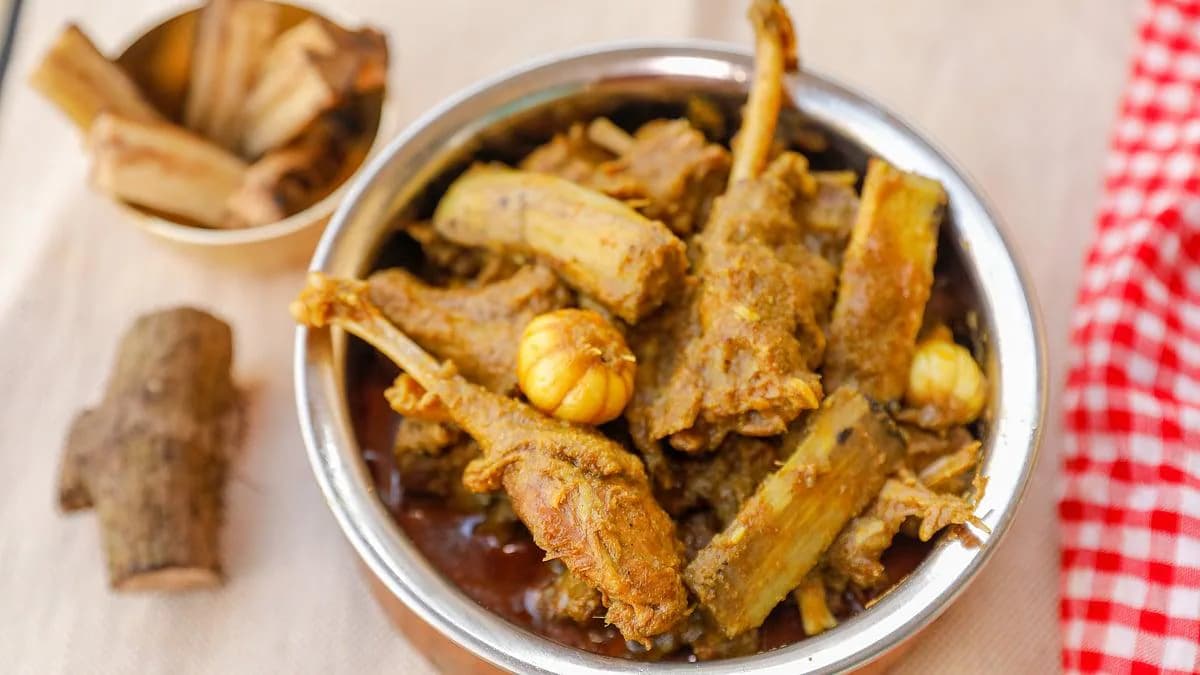
Hash-bash: duck with bamboo shoot
Rich duck and fresh bamboo shoot create a natural contrast: fat and depth on one side, gentle bitterness and crunch on the other. Slow cooking allows each to season the other.
The dish reflects the wetland, forest and Sylheti influences around Habiganj, while individual family versions may vary widely in spice and texture.
Sidol bhorta with roasted chilli
Sidol preserves small fish through drying and fermentation, concentrating flavour for seasons when fresh catch is less dependable. Roasted and mashed with chilli, onion, garlic and mustard oil, it becomes a bold bhorta for hot rice.
Related sidol traditions appear across northern Bangladesh. They speak to resourcefulness: preservation as a source of pleasure and identity, not merely necessity.
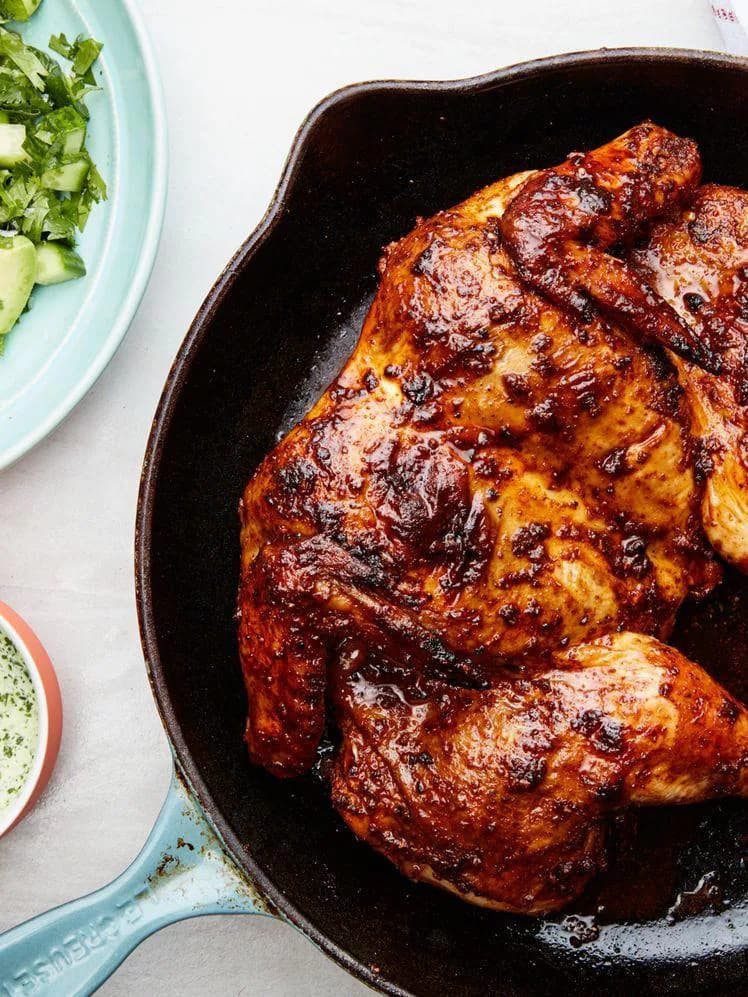
Traditional murgi roast
Murgi roast is festive rather than fiery. Yoghurt, onion paste and fragrant whole spices form a pale, rich gravy around tender chicken, with sweetness and perfume held in balance.
At weddings, Eid meals and family celebrations, the dish often arrives alongside pulao—part of a larger language of welcome and generosity.
Food geography is porous: recipes travel with families, while memory gives particular places their strongest associations.