

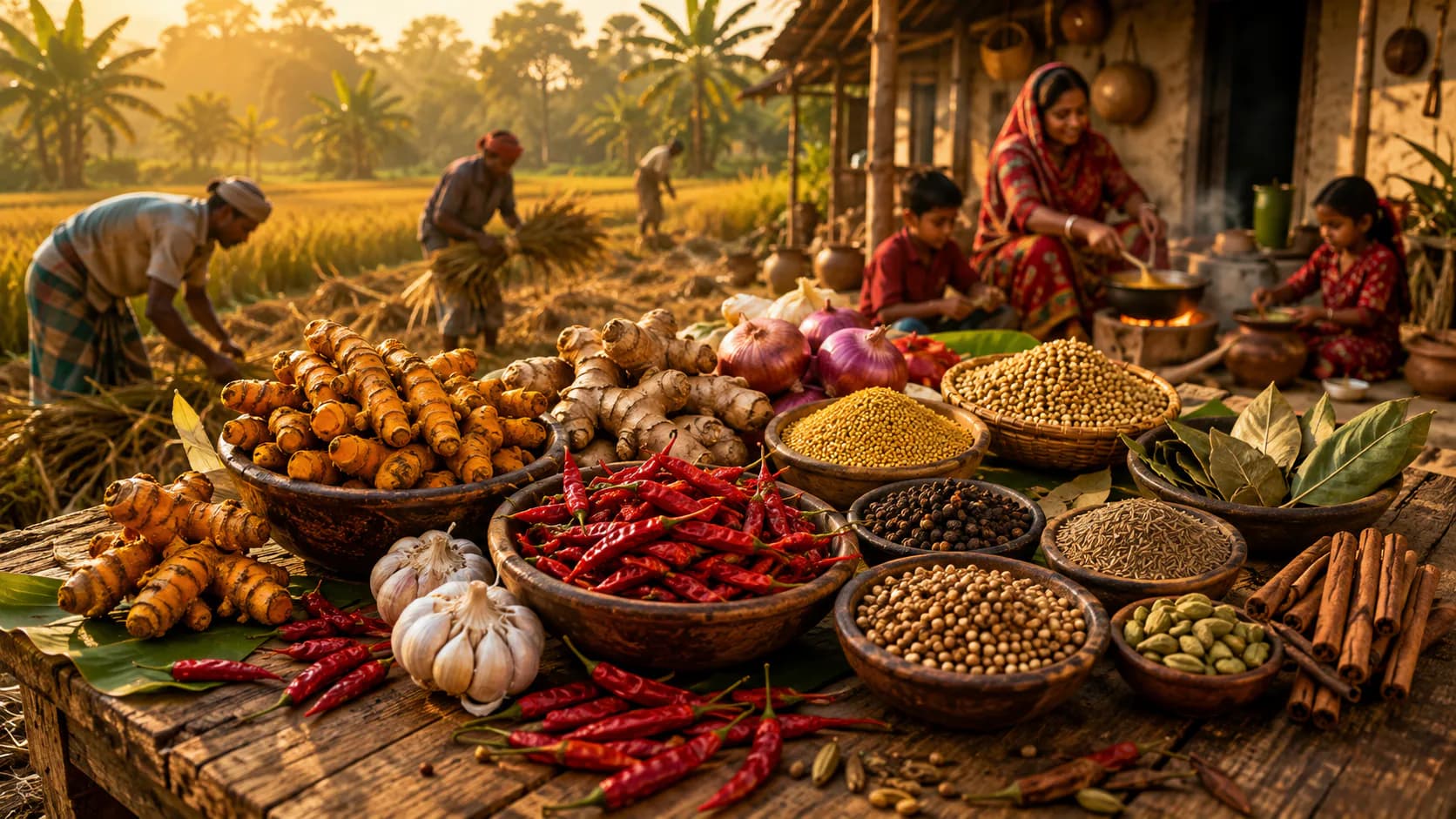
Bangladeshi cooking begins long before a pan reaches the stove. It begins in fields, courtyards and markets, where ingredients are grown, dried, sorted and chosen with care.
This collection follows six pantry foundations from harvest to kitchen. Each one brings its own colour, aroma and technique; together, they create the layered flavour that makes a Bangladeshi meal feel familiar.
Binni Holud: a golden thread through the everyday kitchen
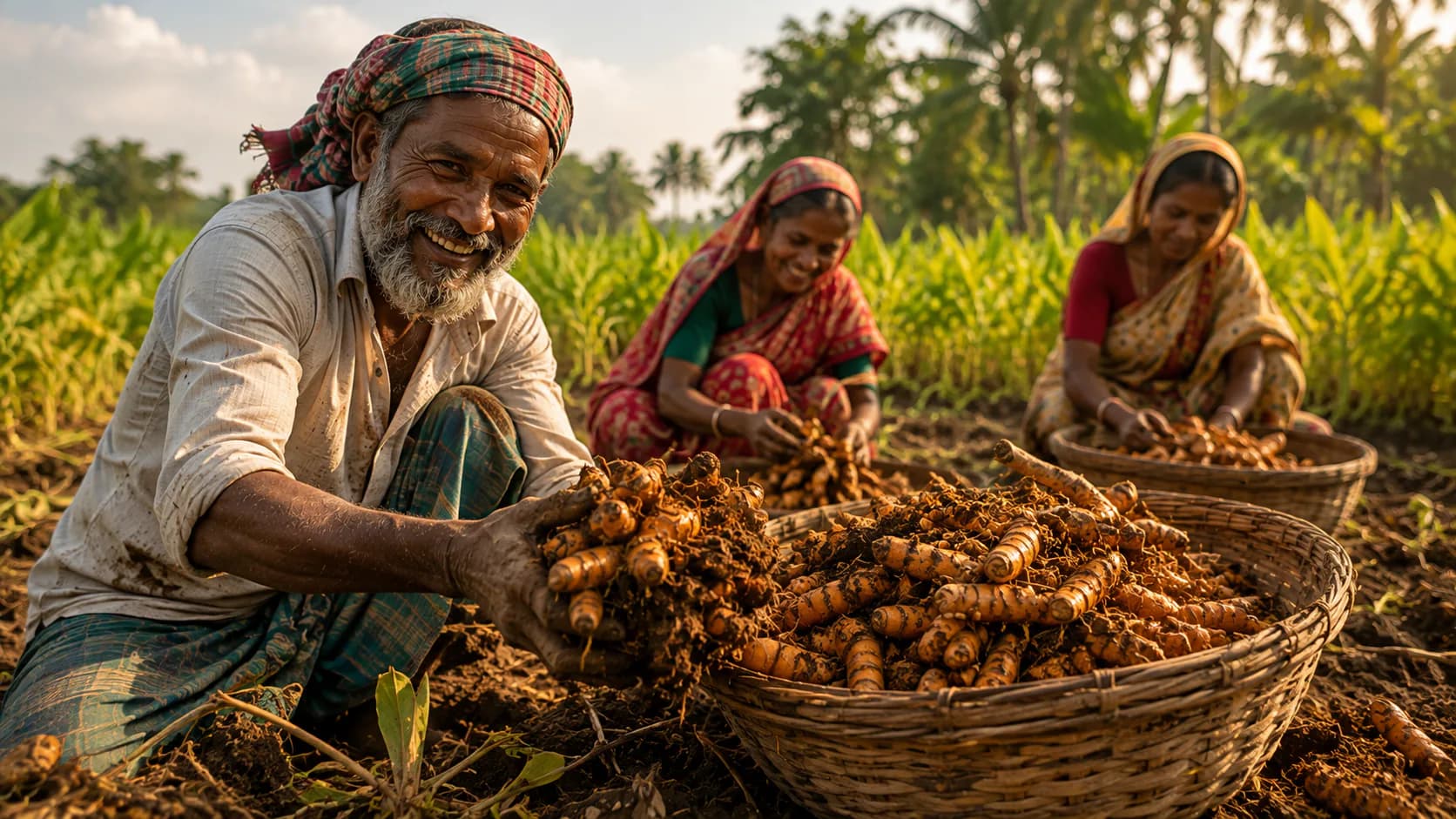
Turmeric is among the first spices to enter many fish, meat, lentil and vegetable dishes. The name Binni Holud is associated with turmeric prized for a saturated golden colour, an earthy fragrance and the warmth it lends without overwhelming other ingredients.
Turmeric rhizomes develop below ground. After harvest they are cleaned, cured, dried and polished before being sold whole or ground. Good handling matters: excess moisture dulls both aroma and keeping quality, while careful drying preserves the ingredient's character.
At home, look for a clean, earthy aroma and an even natural colour. Keep ground turmeric airtight and away from light and humidity; buy in quantities that will stay lively rather than lingering for years at the back of a cupboard.
- Earthy and warm
- Builds golden colour
- Store away from light and moisture
Hathazari Red Chilli: colour, warmth and regional identity
Chilli arrived in South Asia through early modern trade and became inseparable from the region's food. Around Chattogram, the name Hathazari Red Chilli has come to signal the vivid colour and balanced warmth valued in local cooking.
Ripe chillies are picked, cleaned and dried until their moisture is low enough for storage or grinding. The best powder smells fresh and fruity as well as hot; heat alone is not a measure of quality.
Use it to build colour and warmth in fish curry, bhuna, dal, vegetables, bhorta and achar. Whole chillies offer slower, rounder heat, while powder disperses quickly through a masala. Both should be stored airtight, dry and away from direct sun.
- Vivid red colour
- Fruit-forward warmth
- Whole, crushed or ground

Ginger: the bright, aromatic foundation
Ginger brings warmth, citrus lift and an earthy edge. Crushed with garlic, it forms an aromatic base for countless curries and marinades; sliced or bruised, it can stay more distinct in the finished dish.
Bangladesh grows ginger as a warm-season spice crop, including in hilly and highland areas where drainage suits the rhizome. Once lifted, it is cleaned and sorted for fresh sale or drying.
Choose pieces that feel firm and heavy, with taut skin and a lively aroma when cut. Refrigerate fresh ginger in a breathable or loosely wrapped container and trim only what you need.
- Warm and citrusy
- Pairs naturally with garlic
- Use fresh for the clearest aroma

Garlic: savoury depth in every layer
Garlic quietly gives structure to Bangladeshi cooking. Raw or lightly cooked it is assertive; browned slowly, it becomes rounded and sweet. That change is why the same ingredient can anchor dal, fish curry, meat bhuna, bhorta and pickle in very different ways.
Garlic is a cool-season crop in Bangladesh. Mature bulbs are lifted when the leaves begin to dry, then cured so the papery skins can protect the cloves in storage.
Select dry, compact bulbs with firm cloves and no soft patches. Airflow is more useful than refrigeration for whole bulbs: keep them cool, dark and well ventilated.
- Pungent when raw
- Sweetens as it browns
- Keep whole bulbs ventilated
Mustard paste: Bengal's unmistakable pungency
Mustard seed becomes something entirely different when soaked and ground. The resulting paste is sharp, aromatic and faintly bitter, with a heat that rises through the nose rather than simply burning on the tongue.
It is central to shorshe-style fish, prawns, vegetables and marinades. A little salt and water help the seeds grind smoothly; gentle cooking keeps the flavour expressive. Household methods vary, and many cooks combine yellow and darker seeds to tune the balance of colour and pungency.
Fresh paste is perishable. Refrigerate it in a clean sealed container, follow the maker's storage guidance and use it while its aroma remains vivid.
- Sharp and aromatic
- Suited to fish and vegetables
- Refrigerate fresh paste
Onion: the patient architecture of a bhuna
Onion provides the body beneath many Bangladeshi gravies. Sliced onion can stay fresh and crisp, soften into a pale base, or cook slowly to a deep brown sweetness. Each stage produces a different dish.
Bangladesh grows onion mainly as a cool-season spice crop. After harvest, the bulbs need careful drying and ventilation; trapped moisture encourages spoilage before they ever reach a kitchen.
Choose firm bulbs with dry skins and no sprouting or soft spots. At home, give them air and shade. When cooking, judge by colour and aroma rather than the clock—the pan, moisture and size of the cut all change the timing.
- Fresh, softened or browned
- Builds body and sweetness
- Store cool, dry and ventilated
In a patient bhuna, onion is not background. It is the structure that carries every spice around it.